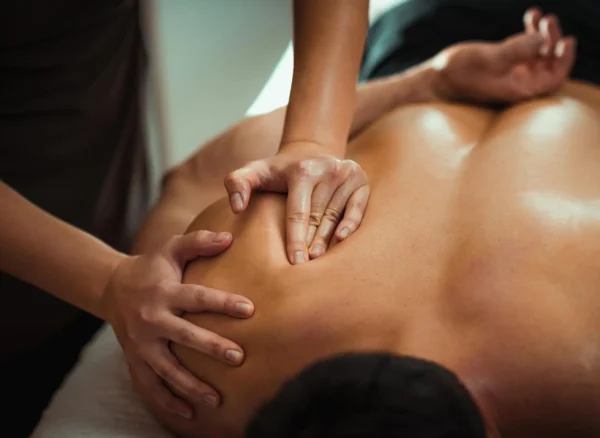
If you’ve ever had needles in your back at a physio clinic, someone has probably asked you, “Oh, is that acupuncture?” We get this question all the time at Focus. The short version: same needles, very different reasons for where they go.
The short answer
Acupuncture comes from traditional Chinese medicine. The needles go into set points along the body’s meridians and usually stay in for a while.
Dry needling is based on Western anatomy. Your physio feels for the tight, tender spots in your muscles and needles those spots directly to help ease the tension. IMS (intramuscular stimulation) is one type of dry needling. It also looks at the nerve that supplies those muscles.
What is acupuncture?
Acupuncture has been part of traditional Chinese medicine for thousands of years. The idea is that energy, called qi, moves through the body along pathways called meridians. Needles placed on those pathways are meant to bring things back into balance.
In a typical session, you’ll have several needles in at once and rest for 15 to 30 minutes. Most people describe a light tingle or a dull ache. In BC, it’s done by registered acupuncturists, plus some other health professionals who’ve trained in it.
What is dry needling?
Dry needling is a catch-all term for using fine needles to treat sore, tight muscles. “Dry” just means nothing gets injected.
Your physio looks for knots or tight bands in the muscle, often called trigger points, and puts a needle right into them. You may feel a quick twitch in the muscle. It can feel a bit strange, but it’s normal.
IMS: a type of dry needling we offer
IMS, or Gunn IMS, was developed right here in Vancouver by Dr. Chan Gunn. His idea was that some stubborn pain may come from an irritated nerve, often where it leaves the spine. When that happens, the muscles connected to that nerve can stay tight, short and tender.
So with IMS, the physiotherapist doesn’t just treat the sore spot. They find the shortened muscles linked to that nerve, then treat both the painful area and the muscles near the spine.
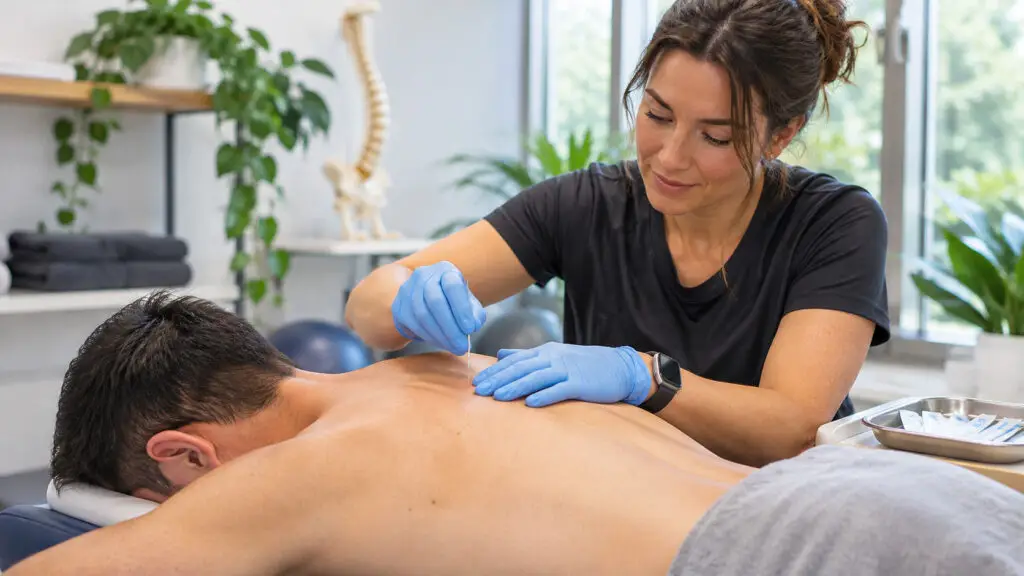
Several of our physios do dry needling, and some are also certified in Gunn IMS. It’s done as part of a regular physiotherapy visit, along with hands-on treatment and exercises. Learn more about IMS at Focus.
IMS vs acupuncture
If you’ve been told IMS could help, you might be wondering if it’s just acupuncture with a different name. It’s not. The needles look the same, but the thinking behind them is different.
Acupuncture points are based on meridians. IMS points are based on what your physio finds when they assess your muscles and nerves. That often means treating muscles near your spine that connect to where it hurts, not only the spot that’s sore. IMS is done by physiotherapists, and at Focus it’s billed as physio.
Key differences
| Acupuncture | Dry needling | IMS | |
|---|---|---|---|
| Based on | Traditional Chinese medicine | Western anatomy | Western anatomy and nerve function |
| Where needles go | Points along the body’s meridians | Trigger points in tight, sensitive muscles | Shortened muscles linked to an irritated nerve, in the painful area and near the spine |
| How long needles stay in | Often 15 to 30 minutes | Usually only briefly | Usually only briefly |
| What it feels like | A light tingle or dull ache | A deep ache and a quick twitch | A deep ache and a quick twitch |
| Who does it | Registered acupuncturists and others trained in it | Physios trained in dry needling | Physios trained in Gunn IMS |
| Insurance | Usually acupuncture benefits | Billed as regular physio at Focus, no extra charge | Billed as regular physio at Focus, no extra charge |
Which one is right for you?
This isn’t really an either-or. People go for acupuncture for all sorts of reasons, from pain to general wellbeing.
Dry needling and IMS can help with some types of muscle and nerve pain, especially the kind that hasn’t settled on its own. You don’t have to pick one before you book. Your physio will assess you, tell you what they think is going on, and suggest what makes sense. Sometimes that’s needling. Sometimes it’s something else.
Dry needling and IMS may help with things like:
- Low back pain and sciatica
- Neck pain and whiplash
- Tennis elbow and golfer’s elbow
- Shoulder pain, including rotator cuff problems
- Muscle tightness that keeps coming back
- Pain that hasn’t improved with other treatment
What a session is like
Your first visit starts with a chat about what’s going on and your health history. Then your physio assesses you and lets you know if needling makes sense for you.
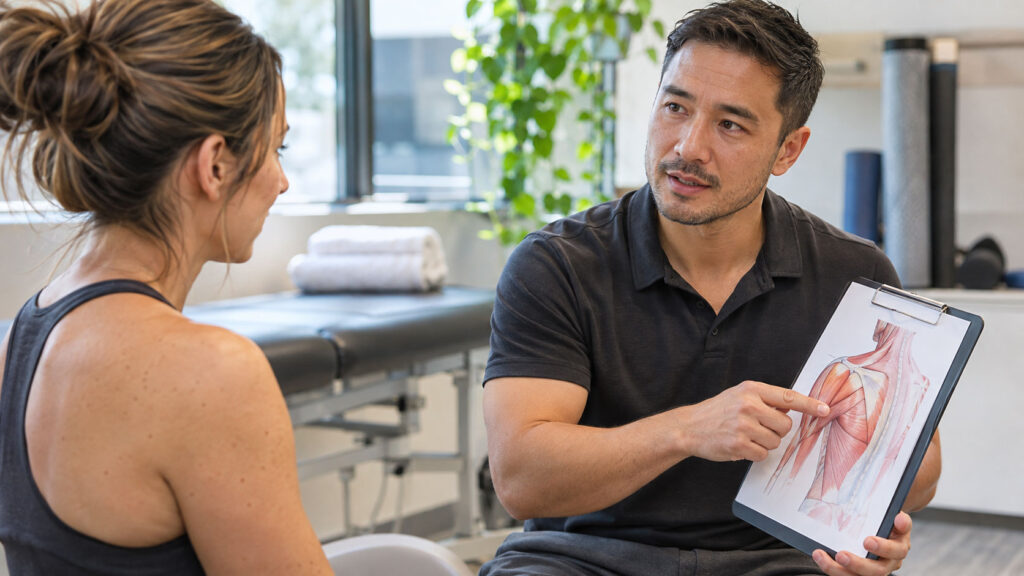
If it does, they’ll explain what they’re going to do and make sure you’re okay with it before starting. Most people feel a deep ache or pressure, and sometimes a twitch. Afterward, the area can feel heavy for a bit. That usually passes quickly.
Needling isn’t recommended if you:
- Aren’t comfortable with needles
- Have an acute infection
- Have poor sensation in the area
- Are pregnant
It’s also not usually used directly on a fresh, swollen injury, though nearby areas may still be treated.
After your session
It’s normal to feel sore for a day or two, kind of like after a tough workout. A few things that help:
- Keep moving. A walk or the exercises your physio gave you beats sitting still.
- Try heat if it feels tight.
- Drink some water and get a good sleep.
- Tell your physio how it felt at your next visit.
You might get a small bruise. Serious side effects are rare, and your physio will go over the risks with you first.
FAQ
What’s the difference between IMS and dry needling?
IMS is one type of dry needling. Regular dry needling mostly targets trigger points in the sore muscle. IMS goes a step further and looks at the nerve supplying those muscles, so you’ll often get needles near the spine too.
Does dry needling hurt?
Most people feel a deep ache or pressure, and sometimes a twitch in the muscle. It’s usually brief. Your physiotherapist will check in with you throughout.
Is dry needling covered by extended health?
At Focus, dry needling and IMS are part of a regular physiotherapy session, not acupuncture, and there’s no extra charge. ICBC and WorkSafeBC clients can also have needling as part of their sessions. Check your plan’s physiotherapy coverage, and see our pricing page for session rates.
How many sessions will I need?
It depends on your condition and how long you’ve had it. Your physiotherapist will give you an idea after your assessment.
Can I have dry needling if I already see an acupuncturist?
Yes. Just let both of them know so they can work around each other.
Do I need a referral?
No. In BC you can book with a physio directly. Some extended health plans want a doctor’s referral before they’ll pay you back, so it’s worth checking.
Book an assessment
Focus Physio + Wellness offers dry needling and IMS in Vancouver’s Olympic Village. Book online or call us at 778-819-6565.
Reviewed by Aaron Vani, Registered Physiotherapist